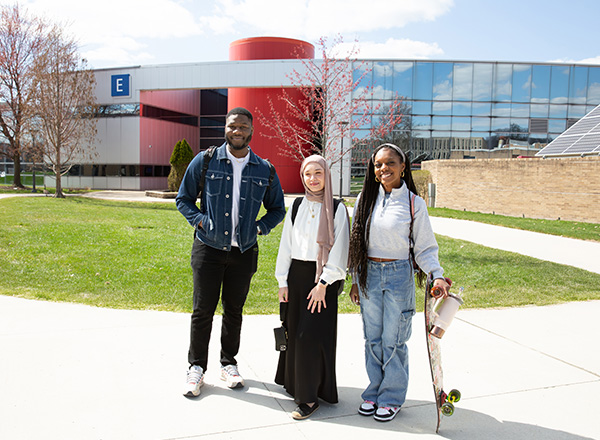
$14.9 million Tech Building renovation powerfully enhances education at HFC

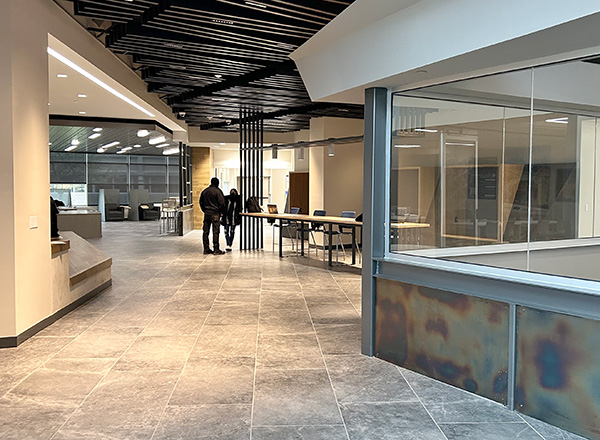
In the past several years, HFC’s Technology Building (Building E on the main campus) underwent a $14.9 million renovation that remodeled 18,000 square feet and added 24,000 square feet of new space as part of the Entrepreneur and Innovation Center / Technology Building renovation and addition project. Overall, the renovations and improvements benefit more than 3,300 students per year.
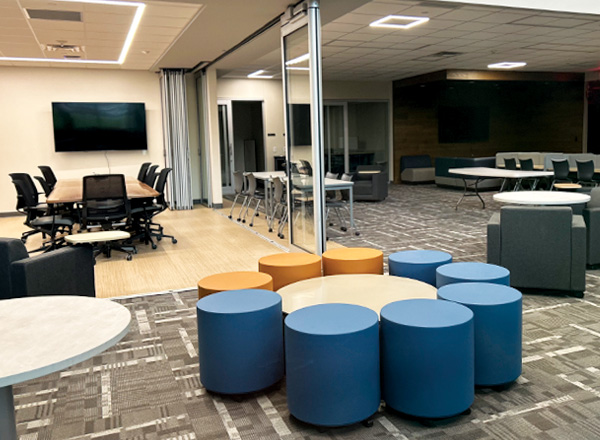
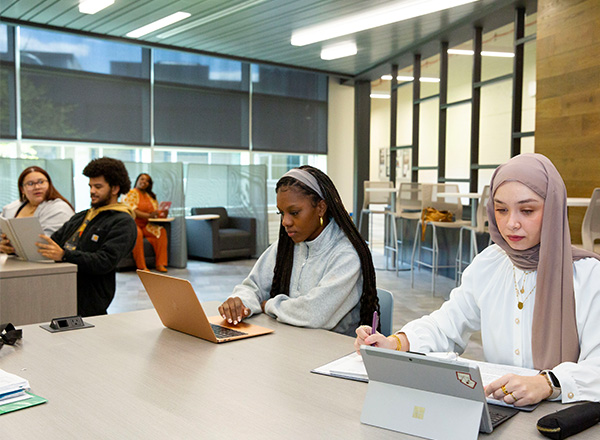
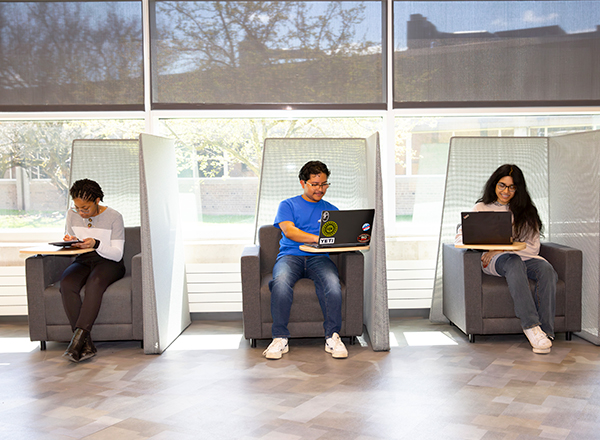
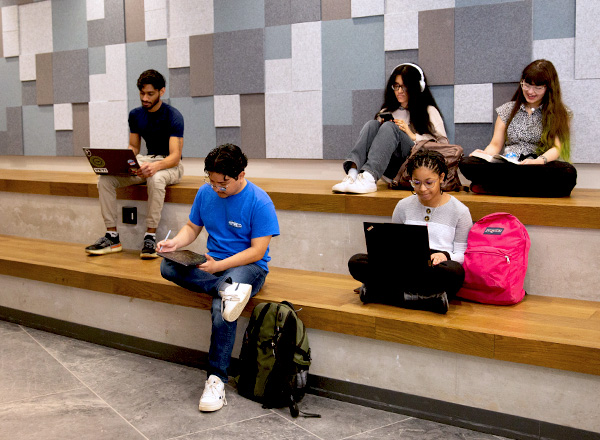
"The new expansion has significantly increased flexibility for the programs housed here. The changes have also enhanced the student experience by providing ample spaces to relax and decompress outside the classroom,” said Associate Dean of Industrial Technologies in the HFC School of Business, Entrepreneurship, and Professional Development (BEPD) Dr. Sašo Krstovski.
The purpose of the renovation was to transform the Tech Building into a cutting-edge, state-of-the-art facility to meet the ever-growing needs of Michigan’s professional trades industries. The future of automotive technology, advanced manufacturing, computer-aided design (CAD), robotics, mechatronics, welding, computer programming, cybersecurity, and systems engineering will require growing industry partnerships, updated technology, and exceptional hands-on training.
The renovation included:
- The Automotive Technology Program and the Ford ASSET Program: More vehicle lab space has been provided to enhance support of the dynamometer technician certification program and new programming.
- The Fabrication Lab: The welding lab, CAD, and precision machining have come together to form one continuous SuperLab space. This model is used by many design and fabrication companies, providing students a real-world educational experience.
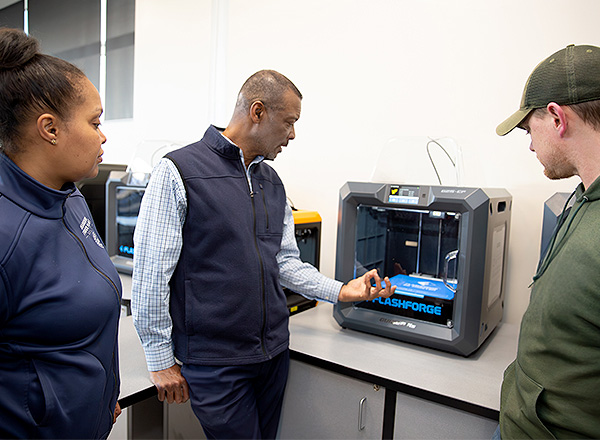
- Product Development Center (“Maker Space”): A collaboration zone connecting students, faculty, industry partners, potential employers, and entrepreneurs with a central location and resources for sharing ideas, innovative design work, and manufacturing.
- Innovation, Entrepreneurship, and Business Skills Center: This center will develop students’ skills in accounting, finance, customer service, marketing, management, and entrepreneurial networking.
- Improved Learning Spaces: Much-needed upgrades have been completed on more than 10 existing classrooms and instructional labs. This will improve flexibility and connectivity in a hands-on educational setting.
“It really warmed my heart to see how much our instructors and institution as a whole care about our future success,” said HFC student Jadyn Schroeder. “The way our teachers vouched for growth in the departments was a huge stepping stone to providing the space for us to expand our creativity and potential in our studies and future careers.”
Automotive Technology and Ford ASSET program
Two pathways: Auto Tech and Ford ASSET
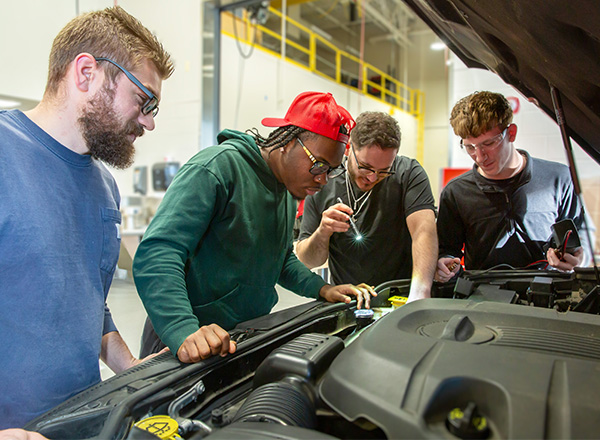
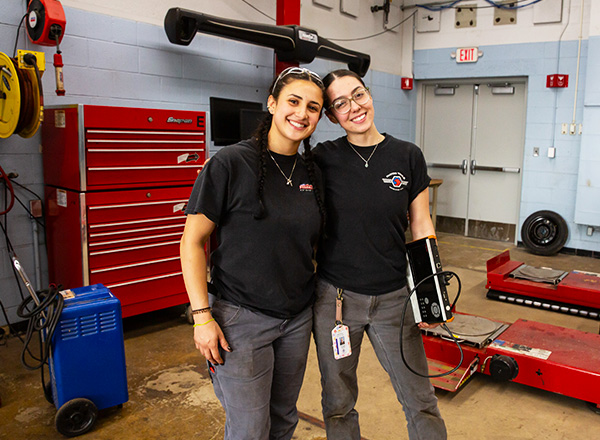
The recent expansion of the Automotive Technology and Ford ASSET programs has significantly enhanced the learning environment for students and instructors.
“It’s nice not having to fight for a single area,” said HFC Automotive Technology/Ford ASSET Chair Ashley Smith. “Whenever you have class, you also have lab space, which is essential to hands-on learning.”
Automotive Technology teaches the full range of skills for automotive technician, automotive master mechanic, or engine specialist careers. The Ford ASSET program is a co-op model that teaches the skills for automotive tech and service manager roles primarily in Ford dealerships. The program can lead to Master Automotive Service Technician careers.
Automotive faculty members are developing a class for Advanced Driver Assist Systems, which includes:
- Adaptive cruise control
- Lane departure warning
- Lane keeping aid
- Parking aid/parking assist (parallel and perpendicular)
- Hands-free driving modes
“The expansion was needed mainly because our facility was built in 1964 and had not been fully updated until this renovation. We were limited in offering classes due to capacity in the old auto lab for safety reasons,” said Ford ASSET Program Coordinator Kristopher Young. “As one example, we are now able to develop an Advanced Driver Assist Systems course because of this renovation.”
HFC student Ramez Saad took classes before and after the upgrade.
“It was very messy during construction. Now that it’s done, there’s more room and easier access to stuff. It’s no longer crowded,” said Saad. “It’s much easier to put a car on a hoist. Before, we always had to hoist it on an angle.”
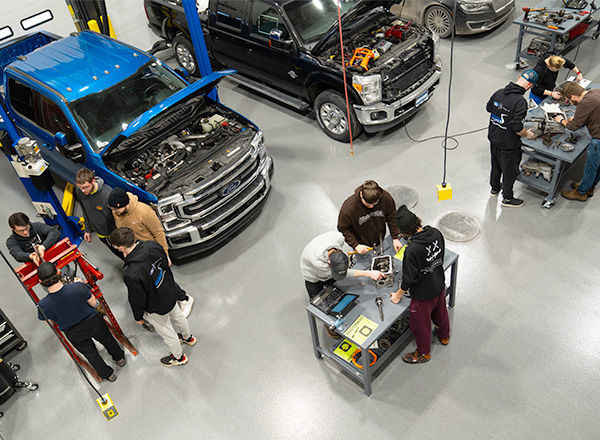
The addition of four new labs, each specifically designed to accommodate the dynamic needs of automotive education, has provided a more structured and efficient space for teaching, said Young. The layout, which includes dedicated teaching areas at the front, ample bench space in the center, and ample vehicle space in the back, allows for a seamless flow between classroom and hands-on learning. This configuration helps instructors effectively present technical content while maintaining direct access to vehicles, enabling a more interactive and engaging learning experience.
“Previously, the program was confined to a small auto shop surrounded by classrooms, making it difficult to manage class sizes and schedules. The limited space meant classes had to be scheduled based on how many people could fit into the old lab, often restricting the number of students who could be trained at once,” explained Young. “The new, increased capacity ensures that more students can receive the hands-on training necessary to succeed in the automotive industry, while also allowing the program to offer specialized courses and stay up-to-date with the latest technology and industry practices.”
Related content: Ford ASSET Program informational video
Architecture and Building Sciences
A whole new world for Architecture and Building Sciences
HFC Building Sciences Chair Chad Richert spoke about the difficulties in teaching before the renovation.
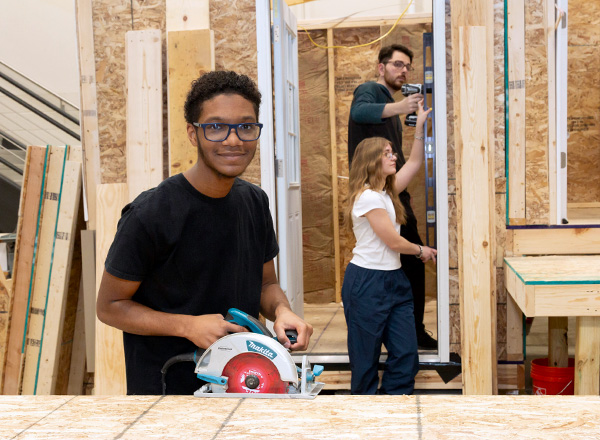
“The big challenge for us in our old classrooms was space,” he explained. “We struggled to teach real-world construction in small classrooms. When we built the Tiny Home, it had to be constructed in small pieces, disassembled, and rebuilt outdoors. The confined space also created safety issues.”
Schroeder saw this firsthand from the student point of view.
“Our lab was only double the size of an average classroom,” she said. “We made do with what we had, and our teachers did an excellent job of providing us with an experience that was interactive and helpful for our careers. But we didn’t have very much room to do the large-scale projects that are so much easier in the new space.”
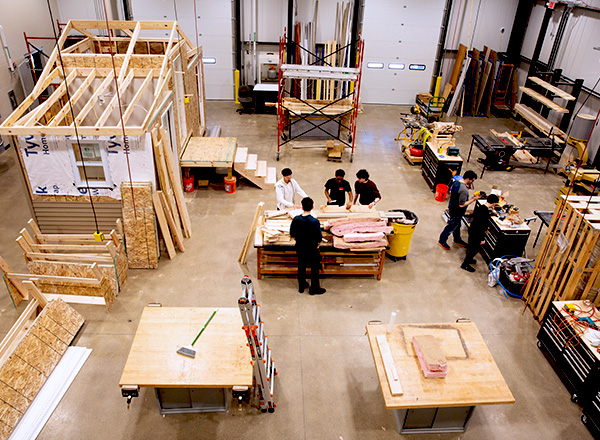
Shroeder continued: “Our lab has expanded tremendously! It's about 5 times larger than the previous space. And, we have a separate carpentry lab with workspaces and tools to support large-scale projects. Students taking Construction Systems and Environmental Building Systems classes have worked on functioning homes for the past two years, which has been absolutely incredible to see!”
Richert listed several ways the renovation positively impacted the Building Sciences program:
- Updated curriculum and lab activities to accommodate larger scale construction projects.
- Increased program enrollment.
- Direct connections with industry partners.
- Pre-apprentice training used on-site by several companies.
- New 1-hour and 2-hour courses that serve workforce development and apprentice-training classes.
- Outreach to area high schools and the community about the Building Sciences program.
- Summer camp for area middle school students that showcases Building Sciences.
- Bulk purchases of materials for economies of scale and to accommodate last-minute class changes.
“In the past, we didn’t have room to store materials,” recalled Richert. “We had to buy everything we needed right before class. Having materials on hand gives us the flexibility to adapt a lecture to meet students where they are. Our new CAD classrooms overlook the shop. Students can go back and forth between disciplines. I can teach a class on design and then walk them into a construction zone so they can see examples of the final product.”
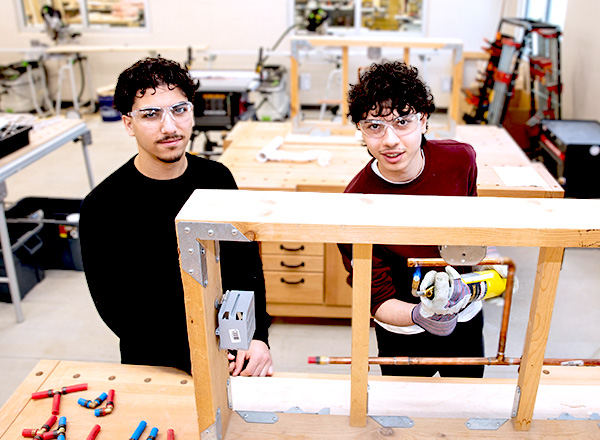
Added Schroeder: “We’ve gotten to experience a much more comprehensive approach to the way buildings are put together and even assemble the plumbing, electrical, and other systems into a small-scale functional home. Previously, we only had space for a small 4x4 box created with hand tools.”
Another valuable aspect of the renovation is the way students engage with one another. There is a sense of community Schroeder never experienced before.
“Walking through the renovated space, you see students gathering and connecting in the halls after their studies,” she said. “There’s a connectedness between us that wasn’t there before. We’ve had the opportunity for in-depth learning in the lab, and that has been my favorite part.”
Added Richert: “Our workshop now is amazing. We now have the ability to build full-size modular construction projects in a safe and conditioned space. Our students have room to work, which has significantly improved our process. I personally love the new energy it has brought to campus.”
Related content: Architecture and Construction informational video
Image gallery