Dr. Tareq Ramadan strives to keep Malcolm X’s Detroit legacy alive
For several years, HFC anthropology instructor Dr. Tareq Ramadan has been a tireless champion of preserving the former Inkster home of renowned civil rights leader Malcolm X.
This year commemorates Malcolm X’s 100th birthday. To celebrate this milestone, Ramadan is in the process of establishing the Malcolm X Leadership Award, a scholarship for HFC Students, with the HFC Foundation. The $500 scholarship will award students for both their academic achievements and their community service and social justice work.
“Malcolm X is one of the most iconic human rights figures and social revolutionaries of the 20th century. His message of justice, equality, and collective liberation from systems of oppression continues to resonate with people across the globe 60 years after his tragic death,” said Ramadan. “His struggle against injustice, his defense of human rights, and his calls for social empowerment have become universal values for so many communities, both in the United States and abroad. He holds a special place in both U.S. and global history. One could argue that he is more popular today across the globe then he ever was.”
A Malcolm X biography at the intersection of history and anthropology
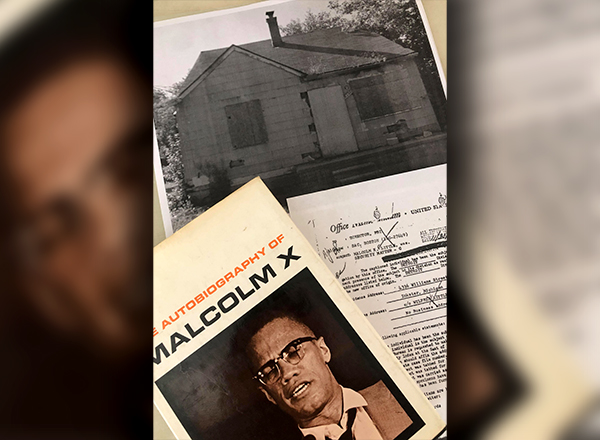
Ramadan is also writing a book about Malcolm X. He plans to complete it within months. The book centers on Malcolm X’s time in and around Detroit, including Inkster.
“Malcolm X proclaimed himself ‘a Detroiter,’ so this book is as much about home and belonging as it is a traditional biography,” explained Ramadan. “It also draws from interviews with individuals who knew Malcolm, including relatives, and incorporates findings from some still unpublished and previously unexamined sources, including local law enforcement records. I am even incorporating some archaeological findings. We excavated the property surrounding his former Inkster residence, and these findings will touch on the social history of the home in which Malcolm Little formally became Malcolm X. I hope to provide new insights into his life during the time he lived in and traveled through the area. Ultimately, the goal is to complete the book at the intersection of history and anthropology, the latter of which Malcolm X had strong opinions about.”
Leading the Malcolm X Inkster Home Historical Preservation Project
In 2021, Ramadan was awarded a $380,850 federal grant from the National Park Service Historic Preservation Fund to rebuild 4336 Williams Street in Inkster, which was owned by Wilfred (Malcolm X’s brother) and Ruth Little, and where Malcolm X once lived. This endeavor elicited media attention.
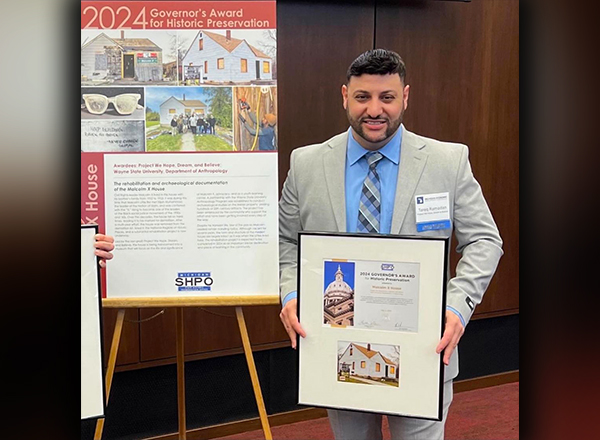
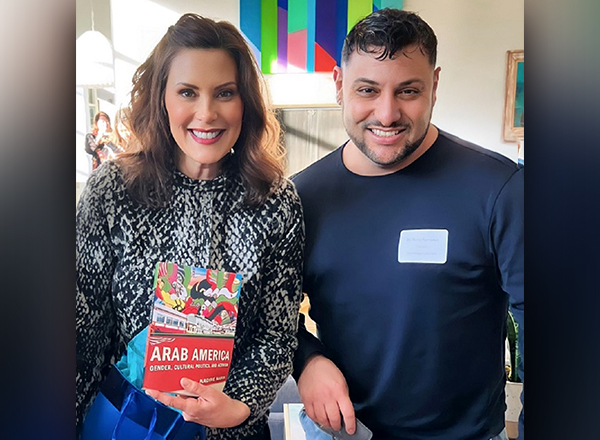
Ramadan nominated Malcolm X's Inkster home for recognition by the Michigan State Historic Preservation Office, which ultimately helped land the home on the National Register of Historic Places. From 2022 and 2023, he organized an archaeological excavation at the site with the Wayne State University Anthropology department. In 2024, Governor Gretchen Whitmer awarded him the prestigious Governor’s Awards for Historic Preservation.
While preserving the house, Ramadan and his team are turning it into a museum.
“We hope to complete it by the end of this year in time to celebrate Malcolm X’s 100th birthday through a grand opening to the public,” he said. “We are actively in the process of acquiring items for the museum. We feel the museum will provide us with a permanent platform to share the story of his life and his message to a broad audience. Once the home is fully restored, we plan to launch the museum as one of the final components of the Malcolm X Inkster Home Historical Preservation Project.”
Working with the Pistons on Detroit Red clothing line
In 2024, Ramadan worked as a creative consultant for the Detroit Pistons on a "Detroit Red" Malcolm X limited-edition clothing line and commemoration project.
“I provided the historical background to Malcolm X’s life in and around Detroit,” he recalled. “More specifically, I was part of a small, but incredibly talented team that helped create a tribute campaign titled ‘Detroit Red’ – Malcolm X’s nickname – designed to highlight his close ties to the city. Though I was solely involved with the historical aspects of the project, the collaboration resulted in the production of a limited-edition clothing line that included hats, hoodies, and T-shirts featuring his image and related iconography and text.”
Ramadan continued: “It was a truly remarkable experience to work with the Pistons and the Malcolm X Estate, both of which were incredibly generous and professional. As a lifelong Pistons fan and a Malcolm X admirer since I was a teenager, this collaboration was special for me on a personal level. Through it, I was also fortunate to meet Malcolm X’s daughter, Qubilah Shabazz, when the campaign and clothing line were revealed during a nationally televised Pistons game earlier this year.”
Creating a digital museum of Middle Eastern maps for the academic community
Outside his Malcolm X work, Ramadan is creating a digital archive of a map collection he assembled over the years, including maps from the 18th to the early 20th centuries in many languages, including Ottoman Turkish, Arabic, English, Hebrew, French, and German. He’s also including a travel documents collection from various Middle Eastern countries.
“My plan is to create an accessible digital museum of maps and various documents pertaining to Middle Eastern history – newspapers, old passports, maps, atlases, letters, photos, etc. – to be available online. I want them to serve as an important source of research. The maps will also include information about where, when, and by whom they were published. My hope is this digital museum becomes a tool for students, researchers, and scholars of the region. I am hoping to do the same with materials I've collected on the Nation of Islam and related to the history of Islam in America,” he explained.
Ramadan has always been fascinated by maps, globes, atlases, and anything pertaining to cartography. He traveled to Jordan as a child, which sparked his interest in geography and archaeology.
“I had long been curious about what maps of the Middle East looked like prior to the construction of the region’s nation-states after World War I by France and Britain,” he said. “My grandfathers were born during the end of the Ottoman Empire, and I had always wondered how people across much of the Arab world would have identified themselves before the countries they ultimately belonged to formed. Over the last several years, I began collecting maps, atlases, and old travel documents as artifacts of identity, which are also material manifestations of changing geopolitics across time and space.”
Most of the items he collects are in scripts like Ottoman Turkish and Arabic, while others are in English, French, Hebrew, Aramaic, Chinese, Japanese, German, and other orthographies and languages.
“I have accumulated hundreds of maps and other cartographic materials that I am preparing to scan, digitize, and publish as an online, virtual collection primarily for students and scholars,” he said. “I’d also like to collaborate with educational and cultural institutions to create some physical exhibits where the public can see them up close.”
Finds teaching at HFC “incredibly gratifying”
A Dearborn native, Ramadan is the second of three siblings. A graduate of Truman High School in Taylor, he is a 3-time alumnus of Wayne State. He earned both his bachelor's and doctoral degrees in anthropology and his master’s degree in near eastern studies. He speaks fluent English and Arabic.
Ramadan has been teaching for 18 years, eight of them at HFC.
“HFC is an incredibly welcoming place filled with professional and caring faculty and administrators, as well as hard-working and ambitious students who make teaching incredibly gratifying. The campus is accessible and inviting, and I have thoroughly enjoyed my experience over the past eight years. I was born in Dearborn, and HFC has always made me feel right at home.”
For Ramadan, the best part about teaching is being able to provide students with tools that allow them to see the world from new perspectives.
“Teaching allows me to support my students in their academic endeavors,” he said. “I always inform them that I will write letters of recommendation for them so that I can help them achieve their academic and professional goals, because their success is important to me. I would never have gotten where I am – as an academic and a professional – without the encouragement and assistance of my professors, so investing in my student’s lives is an obligation for me as an educator. Teaching and seeing my students achieve their goals is a great source of pride for me.”