Seventh Annual Retention, Success, and Best Practices Conference
Registration for the conference has closed due to very high interest. Tickets are not required for those who have registered. We look forward to seeing you there!
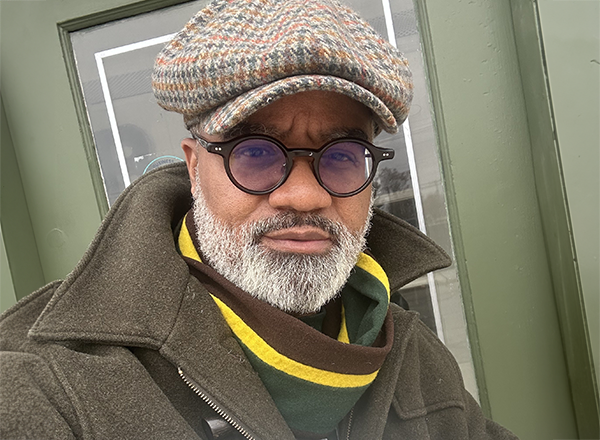
HFC’s Dr. Henry J. Bowers Focus Group will host its 7th annual Retention, Success, and Best Practices Conference on Friday, April 24, from 8:30 a.m. to 3:15 p.m. on the first floor of the Andrew A. Mazzara Administrative Services & Conference Center (ASCC) (Building L on the main campus). Dr. Rashid Faisal will be the keynote speaker.
Faisal is an associate professor and department chair in the College of Urban Education at Davenport University. His scholarship focuses on the history of urban education, school reform, teacher education, leadership preparation, culturally responsive pedagogy, and the Black intellectual tradition. He developed the Black Intellectual Legacy Model, a theoretical framework that examines how Black intellectual traditions, institutions, and cultural practices shape academic identity, achievement motivation, and collective advancement among Black Americans and their communities.
"Throughout my life, I have been a student of Black history. My father had a vast library on African history, Black history and the diaspora, and Black American history. My learning and how I came to make sense of the world was through this lens," he said. "The best part of being an educator is my own continued learning and the refining of my professional practice. I enjoy learning and teaching more than anything. As a result, I bring a natural curiosity and enthusiasm to my profession that greatly benefits my students. Seeing students develop clarity, confidence, and critical consciousness – especially when they begin to see themselves as scholars and leaders – is incredibly rewarding."
Celebrating 100 years of Black History Month
The theme of this year’s conference is "100 Years of Excellence: The Intellectual Legacy of Dr. Carter G. Woodson." Faisal’s keynote address will commemorate the 100-year anniversary of Negro History Week, the precursor to Black History Month. Woodson’s reason for establishing Negro History Week was to serve as a corrective measure to the history of African and Black history being excluded from the curriculum in K-12 schools and higher education.
"Dr. Woodson is an example of the BILM when he established Negro History Week in 1926," said Faisal. "My aim is to provide attendees with knowledge on how this commemoration came about, the obstacles faced, and the opportunities it provided to children and college students across the country to gain an authentic understanding of Black history, which comprises the missing pages of American history."
Bowers Focus Group faculty advisor Dr. Kalvin DaRonne Harvell invited Faisal to speak at HFC. Harvell said Faisal personifies Ujima, one of the seven Nguzo Saba principles of Kwanzaa, which means collective work and responsibility.
"Since 2019, Dr. Faisal has been a conscious supporter of our conferences," said Harvell. "More than providing plenary sessions and extending invitations to his colleagues at Davenport to recruit our students, Dr. Faisal offers wise counsel and continues to show and prove his commitment to excellence through both scholarship and deeds."
Faisal considers it an honor to speak at HFC.
"Community colleges play a pivotal role in expanding access to higher education, particularly for first-generation students, adult learners, and students from diverse backgrounds," he said. "I appreciate the opportunity to engage with educators and leaders who are committed to student success and institutional innovation. Dr. Harvell is both a friend and colleague. I have deep admiration for his work, and I’ve delivered workshops at three previous conferences. I also attended HFC briefly, and found my time there rewarding due to the people I met and the professors who worked to get me on the right track."
Born to be an educator
A lifelong Detroiter, Faisal got his start in urban schools, having graduated from Cass Technical High School. He has dedicated his career to creating pathways to post-secondary success for students of color, first-generation college students, and students from underserved communities.
"My family has resided in the city since the 1900s in the Black Bottom and Paradise neighborhoods on the east side of Detroit," said Faisal. "The city has profoundly shaped my identity, my scholarship, and my commitment to educational equity. Growing up in Detroit provided me with firsthand insight into the brilliance, resilience, and challenges present in urban communities."
With almost 30 years in urban education, Faisal has held many positions, including teacher, reading specialist, principal, central office administrator, interim superintendent, and director of an early learning center. At the university level, he has worked as an instructor and program supervisor in colleges and universities with an urban mission, as well as an education consultant to urban school districts.
"I’ve always had a fascination with learning and teaching others," he said. "Having grown up around books my entire life and having attended schools with well-stocked libraries, books were always around me. Naturally, I grew accustomed to sharing information with my friends, so – informally, I guess – I was always a teacher."
His defining moment came when Faisal read an article in Ebony about Dr. Benjamin Mays called "Benjamin Mays: The Last of the Great Schoolmasters." Mays was president of Morehouse College in Atlanta. He inspired generations, including Dr. Martin Luther King, Jr., to strive for scholastic excellence and to use knowledge and education to serve marginalized people.
"From that moment, I knew what I was born to do," said Faisal. "I was born to be an educator. And I followed Mays’ maxim throughout my career: 'Whatever you do, strive to do it so well that no man living and no man dead and no man yet to be born could do it any better.'"
Education is an intellectual and moral endeavor
From 2014-22, Faisal served as an instructor and Principal-Internship Supervisor for the College of Education, Health, and Human Services at the University of Michigan Dearborn. Faisal continues to work on historical projects through the U-M Inclusive History Project and the U-M African American Student Project.
Since 2022, Faisal has led Davenport's ongoing efforts to build a diverse teacher pipeline to address the shortage of underrepresented male teachers at the K-12 level. He oversees Davenport's graduate program offerings, designed to provide elementary and secondary teachers and administrators with culturally responsive teaching and leadership strategies to empower them and their students intellectually, socially, and emotionally.
His research centers on Black history, Black education, and culturally relevant pedagogy with a focus on how historical consciousness, identity, and institutional responsibility shape student achievement and leadership practice. Faisal is deeply committed to community outreach and partnerships, believing that meaningful educational change happens when schools, universities, families, and communities work together to expand opportunity and strengthen institutions.
Faisal is a 3-time alumnus of Madonna University, where he earned a bachelor's degree in English, a bachelor's degree in sociology, and a P-12 teacher certification. He earned a master's degree in education with reading specialist certification from UM-Dearborn, where he also earned a doctoral degree in metropolitan education. Faisal also earned a master's degree in organizational leadership with school building certification from Columbia University in New York City. He completed additional coursework at HFC (then Henry Ford Community College), Morehouse, the University of Chicago, Cornell University, the University of Notre Dame, and Yale Divinity School.
"My work is grounded in the belief that education is both an intellectual and moral endeavor," said Faisal. "Our responsibility is not only to teach content, but to cultivate disciplined thinkers, ethical leaders, and engaged citizens. I remain committed to advancing educational models that center excellence, equity, and liberation. As Dr. Mays said, 'The tragedy of life is often not in our failure, but rather in our complacency; not in our doing too much, but rather in our doing too little; not in our living above our ability, but rather in our living below our capacity.' Words of wisdom."
Transfer partners will be on-site
Representatives from more than 15 colleges, universities, and professional organizations will be on campus for the resource fair to provide information and connections to students.
There will also be breakout sessions throughout the day. Participants will have the opportunity to complete a Virtual Historically Black Colleges & Universities (HBCU) Tour. Be sure to talk to the representatives during their sessions for more information.
There will also be:
- A tour of the HFC main campus
- A special networking activity
- A special STEM activity
Please register by April 15
This conference is free and open to the public. Both a continental breakfast and buffet lunch will be provided at no charge. Please register for the conference by Wednesday, April 15 (see link above).
NOTE: The presentations may be recorded. By registering, you acknowledge such recordings and consent to being recorded.
For questions or more information, contact any of the following:
- Dr. Kalvin DaRonne Harvell at 313-317-1533 or kharvell@hfcc.edu
- Mr. Chardin Claybourne at 313-845-9818 or cclaybourne@hfcc.edu
- Dr. Courtney Matthews at 313-845-6457 or cahenderson2@hfcc.edu
Public events at HFC are open to all. Everyone is welcome.
While the conference is free of charge, there are costs associated with hosting. If you wish, you are welcome to consider donating to the Dr. Henry J. Bowers Focus Group through the HFC Foundation. Select the link, choose the category "Other," and list the Bowers Focus Group as your area of choice.