Dr. Tareq Ramadan shares insights into National Arab American Heritage Month
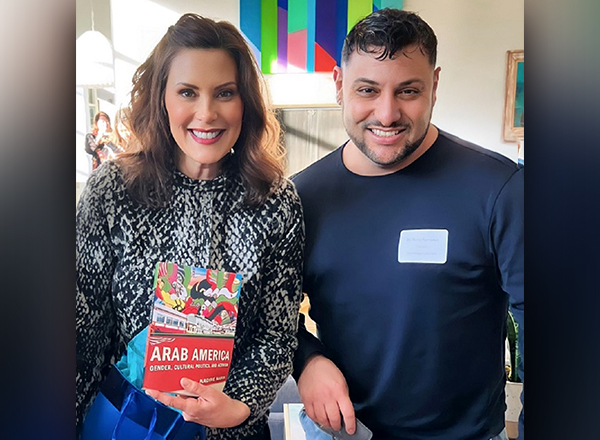
HFC anthropology professor Dr. Tareq Ramadan has developed a deep appreciation for National Arab American Heritage Month, which celebrates the contributions of Arab Americans. Ramadan was appointed to the Commission on Middle Eastern American Affairs by Governor Gretchen Whitmer at the start of 2026.
The Arab American Foundation established National Arab American History Month in 2019. The month-long commemoration received its historic first proclamation by President Joe Biden in 2023. NAAHM is observed annually in April to honor the history, culture, and contributions of the nearly 3.7 million Arab Americans living in the United States. NAAHM features widespread community events, educational programs, and proclamations from the White House and state governments, highlighting the diverse heritage of people who trace their roots to 22 Arabic-speaking nations. Ramadan is a member of the AAF’s NAAHM Committee.
“The month is marked by celebrations and festivities offered primarily by educational and cultural institutions that highlight Arab culture in America. For example, student groups at colleges and universities often hold events showcasing the traditional Dabke dances or hold fashion shows that display attire from across the Arab world. There are food-centered offerings and festivities on college campuses, art and artifact exhibits, and poetry readings. Libraries and cultural institutions create and share posts regarding contributions in literature by Arab American writers on social media or hold in-person or virtual events with writers to discuss their work. Civic, educational, and literary organizations hold an array of events with guests and programming that speak to the Arab American experience,” explained Ramadan.
Raising awareness of the history, experiences, and contributions of Arab Americans
As a way to preserve Arab and Arab American history, Ramadan, a published poet whose work draws on themes related to Arab identity and history, has assembled a collection of cultural artifacts: Arabic-language maps, vintage travel documents from across the Arab World spanning a century, press photos capturing important events related to Arabs in America, postcards sent to or from Arab lands, century-old magazines, books, periodicals, and newspapers from the early 20th century produced by Arab American communities. His goal is to create an online virtual museum.
“I have spent several years curating this collection, and I am now working to develop a digital archive that showcases material culture relevant to Arab American history,” he said.
Ramadan incorporates some of his artifacts in his public talks as a way to offer a more immersive learning experience. He has established several grants for students and scholars to help facilitate research that focuses on the lives of Arab Americans, their communities, and their experiences.
“I like to visit the Arab American National Museum in Dearborn and often provide my classes with a tour during the month of April to help illustrate the various themes we covered in class,” said Ramadan. “I also frequent the many Middle Eastern restaurants in Metro Detroit with friends and colleagues as a way to explore the diverse Arab American community through their culinary offerings, which are often quite enriching experiences. I also do my best to attend, help organize, or participate directly in events and festivities to commemorate NAAHM and to raise awareness of the history, experiences, and contributions of Arab Americans.”