Fulbright Scholar to speak about her cutting-edge AI research at HFC
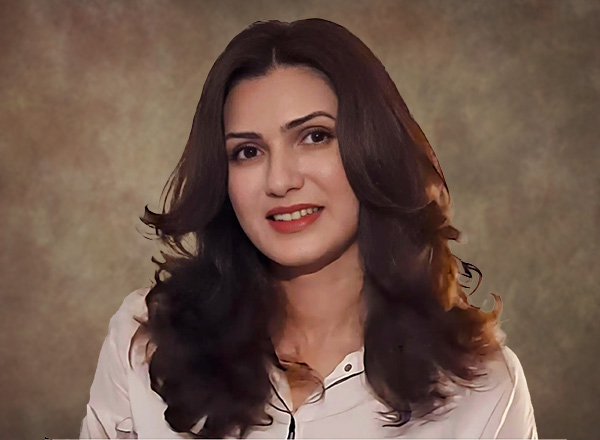
Fulbright Scholar Dr. Tehmina Shehryar will give a presentation about her innovative research at the intersection of artificial intelligence (AI) and ophthalmology at HFC in mid-November.
Her presentation, “AI-Driven Models in Ophthalmology,” will be in two sessions:
- Wednesday, November 19, from 9:30 a.m. to noon in the Michael A. Berry Amphitheater (Room L-115) on the first floor of the Andrew A. Mazzara Administrative Services & Conference Center (ASCC) (Building L on the main campus). This session is primarily for students, though anyone can attend.
- Wednesday, November 19, from 2:15 to 3:15 p.m. in Room J-160 in the Science Building (Building J on the main campus). This session is primarily for faculty, staff, and guests, though students are welcome also.
The HFC School of Science, Technology, Engineering, and Mathematics (STEM); the HFC School of Health and Human Services (HHS); and the HFC Fulbright Committee are sponsoring Shehryar’s visit. HFC Dean of STEM Janice Gilliland and HFC mathematics instructor Sam Bazzi played essential roles in bringing Shehryar to the College.
“The Fulbright Committee is excited to announce that Dr. Shehryar coming in to speak and share her knowledge with HFC. We are looking forward to her lecture and showing her around our beautiful campus. Her visit is an opportunity to demonstrate the innovation and dedication that has been the cornerstone of our work at HFC,” said HFC Pre-Education Director and Fulbright Coordinator Dr. Carolyn Casale, a Fulbright Scholar herself.
Added Gilliland: “The Fulbright Scholar visit reflects our College’s deep commitment to global collaboration and academic excellence. Engaging with international scholars enriches our campus community and provides our students and faculty with new perspectives that strengthen innovation across STEM disciplines. We are proud to continue this partnership and look forward to expanding opportunities that connect our College to the world.”
A leading innovator in AI research pertaining to ophthalmology
A faculty member at the University of Azad Jammu and Kashmir (UAJK) in Pakistan, Shehryar brings more than a decade of experience in AI, deep learning, and medical image analysis, blending her expertise in software engineering with cutting-edge AI research to solve real-world healthcare challenges. She specializes in automated glaucoma detection, AI-based disease diagnostics, and medical imaging innovations.
She is currently conducting research at the Mary M. and Sash A. Spencer Center for Vision Research at the Byers Eye Institute at the Stanford University Department of Ophthalmology as part of her Fulbright grant. Her work focuses on the application of AI and deep learning in the diagnosis and treatment of retinal disorders, aiming to revolutionize how we detect and manage vision-threatening diseases.
Shehryar will explore how multi-modal imaging techniques, such as optical coherence tomography (OCT), fundus photography, and infrared imaging can be paired with AI to transform eyecare. Her work seeks to speed up diagnosis from hours to seconds and enable early detection of retinal diseases – even pre-symptomatic detection. This technology also has the potential for improving access to eyecare in rural and underserved communities, where eye specialists may be scarce.
The first AI-driven model Shehryar will discuss is “Automated Detection of Glaucoma from Fundus and OCT Images.” This model uses a hybrid approach to analyze retinal images and assist in reliable glaucoma diagnosis.
The second AI-driven model Shehryar will discuss is “On-Device Ultra-widefield Imaging AI for Flagging Referable Ocular Melanoma in Community Clinics.” This model utilizes ultra-widefield retinal images and AI algorithms to triage patients for ocular melanoma in resource-limited clinical settings. It is currently undergoing clinical trials at Stanford.
For both models, she will explain:
- The disease: The clinical significance of glaucoma and ocular melanoma, including diagnostic challenges.
- Imaging technologies: The role of fundus photography, OCT, and ultra-wide-field imaging in disease assessment.
- Methodology: Architecture design (e.g., vision transformers) and integration of computer vision techniques.
- Results: Model performance metrics (e.g., accuracy, sensitivity, specificity) and validation outcomes from clinical/preclinical testing.
“During my lecture, I will cover the clinical background of both diseases, the architecture of our AI models, and their real-world performance and results,” said Shehryar.
Shehryar’s educational background
Shehryar earned her bachelor’s degree in computer science from UAJK. She later earned both her master’s and doctoral degrees in software engineering from Bahria University in Pakistan.
Throughout her career, Shehryar has mentored hundreds of students and supervised multiple nationally funded research projects, including the metaverse-based university campus and the machine learning-based disease diagnostic system. Her research has been published in several renowned academic journals, including:
Shehryar is the recipient of the Prime Minister’s National Innovation Award in 2023 and the Best Student Researcher Award at Bahria in 2017. These accolades and honors reflect her commitment to excellence, innovation, and impactful scientific contribution.
“We’re thrilled to welcome Fulbright Scholar Dr. Tehmina Shehryar to our College,” said Bazzi. “Her cutting-edge work using AI to detect and treat glaucoma connects technology and human medicine in ways that can truly transform patient care. Dr. Shehryar represents the spirit of innovation and collaboration we value across our campus. Her talk would reflect on our mission to inspire learning, trigger innovation, and prepare students to make a meaningful impact in a world where AI is reshaping the future.”
Shehryar’s two lectures are free and open to the public. For questions or more information about Dr. Shehryar’s visit to HFC, contact Casale at ccasale@hfcc.edu.